 A vivid story of death and the loss of innocence by Valencia Santhara.
By Valencia Santhara The attic was spectral and cavernous. Moonlight shone through the cracked stained glass, casting dark blue and red shadows on the wooden canvas of the floor. The pock-marked and battered eaves stretched upward towards the rounded roof, which caved into the centre space to reveal a forgotten, broken, dusty dollhouse. I crept towards it, careful to not wake those slumbering below and lifted the hatch. Metal creaked, grown rusty with age, as I forced the old hinge open. As I peered inside at the jumbled heaps of discarded, tiny furniture, my gaze focussed on a crumpled photo, carelessly discarded on the top of a miniature bed. Two faded, young faces beamed at me from the background of a children’s colourful playground. Memories came pouring back of Matthew and I. It seemed like a lifetime ago when there had been the two of us together. The playground was our ocean. We would swirl in the massive dark, broiling sea of the spongy astroturf. A brightly painted boat suspended on poles was our vessel. It would creak and groan, swinging on its chains making us feel as if it was on the verge of capsizing. Young children would pull on metal stays in a futile attempt to keep the deck upright, as others playfully pushed their fellow crew into the black vault of the ocean’s bodice. We imagined waves, white and frothy, thrashing against the gaudily painted portholes of the lower deck. It was always best in a storm. When the wind roared and howled, it felt like an angry beast was lashing at us wildly, threatening to rip a child free and send them whirling into the vortex. But of course, we were never allowed outside then; we would be scooped up by the harried teachers and rushed back inside. Matthew, otherworldly Matthew. He always seemed unfazed by the imminent danger as he leaned into the winds battering his tiny body. Even as electrified strands of lightning forked through the darkened sky, even when the young trees strained and bent almost to breaking point, and even when the rain drove sideways in a frenzy of rage. He would stand, young and free. His hair was wild, his black eyes alive, and his mouth split into a grin of pure delight. We would play games on our boat on the high seas. Imagining sea monsters lurking beneath us. Something was coming, quiet but deadly. Something was there, humming and gliding. Something was coming. We would scream and shout imagining colossal, scale-like fins piercing through the ocean’s surface. We would dart and cower from imaginary fangs that gleamed ghostly white and great curved wings which towered above us. The wicked serpent was our bounty. The sea dragon. The sound of our shrill shrieks would pierce through the oppressive humidity. We answered his battle cry with our own spears, our puny sticks held upright in the air. One. His neck would rear up. Two. We’d load our weapons. Three. He’d charge at us and we would respond by firing our lethal array of weaponry against him. Tiny, sharp stones. Matthew was our brave captain, he’d steadily manoeuvre his boat weaving through the assault outwitting its predator. The air would be heavy with the jubilant shouts of excited children, united, as the boat cleaved through the deep blue towards the sea dragon, intent on deeply gouging his vulnerable belly. We were too naive, our hearts and minds fixated on childish desires - games, make-belief and imagination. She stared at us darkly with a malicious leer. I can vividly remember where I was when my father came to me that day. I was playing with my doll house, rearranging the furniture in the miniature rooms to fit my ever-expanding collection. A plane had crashed, he told me. There were no survivors. It was a Malaysian Airlines aircraft flying from the Netherlands destined for Malaysia, both countries at peace. It ended over Ukraine, a nation torn in two, ripped from the air by a jet shot out of the sky, most likely by Russian-backed separatist rebels in eastern Ukraine. On that ill-fated morning, 298 people tumbled from the sky. Innocent victims. Matthew was one of the 298 victims that day. Everything went dark and cold. Children are not supposed to know about death’s embrace, how she can prey on the innocent, always only a breath away. I often wonder if I made the most of my time with dear, sweet, brave Matthew. I was always thinking of what game to play next, what lay ahead in our future, unaware of how easily life can be taken away from us, so randomly, so cruelly. I look back on those bittersweet times fondly and know that even though Matthew isn’t here today, he lives on in those memories eternally.
0 Comments
 A powerful story of mingling cultures and disconnected family ties, by Shanaiya Singh-Ali.
By Shanaiya Singh-Ali Prologue Once when I was four, my mother set up an experiment. ½ a cup of water, ½ a cup of oil, and an empty glass. I poured the water and oil together, expecting the inevitable outcome that they would dissolve into an oily mess. I was bored. I thought the experiment was pointless. As the two liquids met, I watched wide-eyed, as they separated. No oil in the water, no water in the oil. I stirred vigorously, only to realise that no matter how hard I tried, they would not mix. This experiment is exactly how life is for a child of a Muslim father and a Hindu mother. That child is me. The Story It’s 2 pm on a Sunday afternoon when we pull up to The Grey House. Realising we had an empty day, we decided it was time for our quarterly visit. The tyres of our Audi sweep the rough concrete of the driveway like fingernails on a chalkboard, and the silence inside the car pierces my ears. During this time, my mother and I briefly make eye contact - her face is unreadable, but her shoulders seem tense. “Shanaiya, please enter the gate code”, my dad tells me. I can never quite remember what it is, so I have to double-check. Our car drives in and the large, black cell door slams to a close behind us. We will be here for the next three hours. I’m unsure whether to knock or ring the doorbell when we arrive at the door. I don’t know if the bell has been fixed since the last time we were here, so I conclude that knocking is the safest option. The door is opened by The Big Man and hugs are exchanged. We are used to this scene by now. Walking past the formal lounge and the spare bedroom, I enter the kitchen and the smell of oil-drenched samosas fills my nose. It is only here we are greeted by The Small Woman, who is cleaning. She is always cleaning. We all go to sit down - this is a regular part of our routine - however, I instinctively slow down my steps, and as I’m halfway to the couches I hear, “Shanaiya, would you please start passing around the samosas? Thank you, betiya.” My mum calls me this, and hearing The Small Woman’s pretentious imitation roll off her tongue as if it actually means something to her makes me more uncomfortable. “Sure thing,” I reply. Once I’ve finished passing them out, there’s one spare seat left but I can’t sit in that one. Dadi Dadi, my great-grandmother, used to sit there. Now that she’s passed away, his house feels empty and melancholic without her in it, and I could never bring myself to sit in her seat. For this reason, I perch myself upon the toy box full of my cousins’ toys. There are no toys stored for my brother and me here. The tough, wooden surface is uncomfortable to sit on, and my back aches, so I lean against the wall, munching away at my samosa. The samosa is made of aaloo and the grease suffocates my taste buds. I won’t say I don’t slightly enjoy it, though. The flavours linger on my tongue like rare family gatherings and childhood memories, the nostalgia feels like bliss. I have to pretend to be interested in conversations about the latest family drama, their most recent trip to Fiji, and how the distant ‘uncle’ I’ve never met before is doing. Most of this is lost on me anyway because it’s said in Hindi, a language I’d probably be more fluent in if I was around it regularly. The thought that they’re using the language barrier purely to leave me out crosses my mind. Eventually, the discussion turns to me, and in English, I communicate my recent academic successes. The Small Woman blankly says she is proud of me, whilst The Big Man sits stiffly in his chair, expression unchanged. It’s hard to get a reaction out of him. After we’ve served our time, we say our goodbyes and part ways. My sweaty hand grips the plastic bag with all the food The Small Woman has packed for us in takeaway containers. We glide out of their street and The Big Man and Small Woman fade into tiny dots. My fingertips trace the condensation-covered window, drawing two halves of my heart; one part that’s still with me, one part that I left behind at The Grey House, hoping something would be different the next time we visited, and I could connect the halves again. But it never is, and I don’t expect it anymore. Sometimes I wish we visited Dadi and Dada more often. I know that water and oil will never mix no matter how much you stir the two together, yet I consistently root for a different outcome. I wonder what might’ve been if our family were whole. We enter the driveway to my home and I know the gate code like the back of my hand. I let out a sigh of relief. The performance is over. My dad and mum wrap their arms around me, just because. As my little brother meanders up the stairs, he sees he isn’t part of the group hug and runs up to us, his hands stretched wide. In my home, oil and water remain unmixed, but unlike The Grey House, we have found a way to co-exist in perfect harmony, and we have a home overflowing with love and acceptance. I stop worrying about my family being whole - all I’ll ever need is right here. Glossary: Betiya - daughter, term of endearment Aaloo - potato Dadi and Dada - Grandma and Grandpa on your father’s side 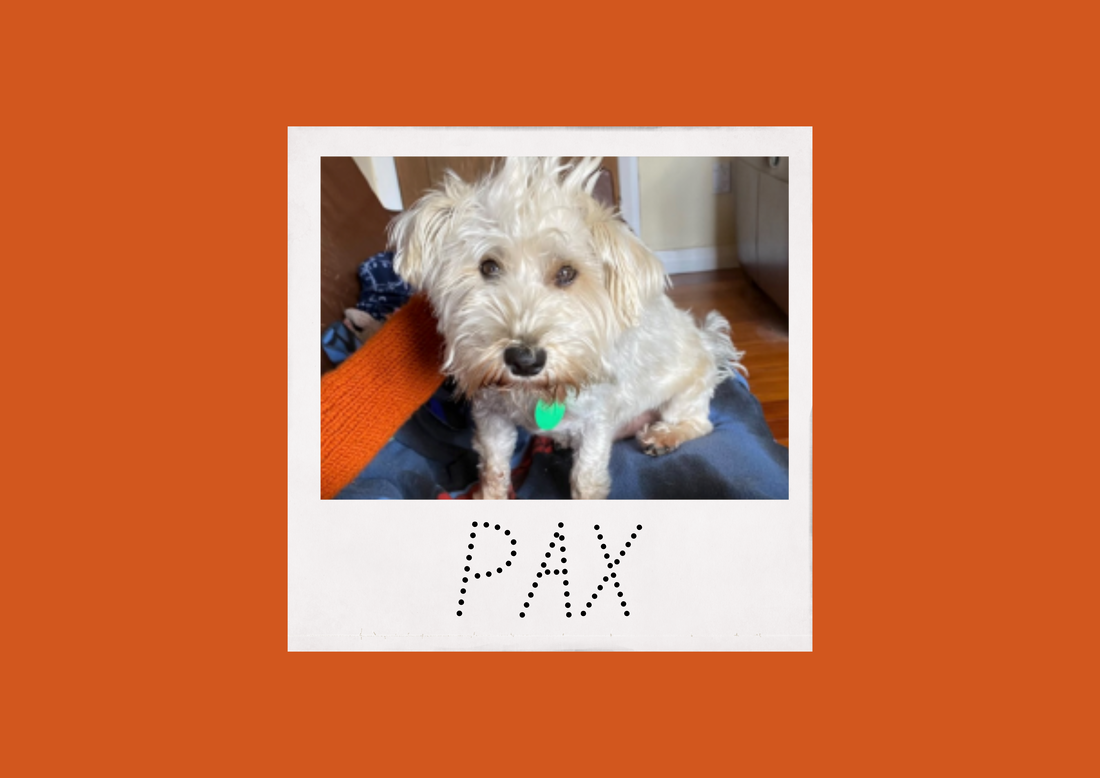 Told from the perspective of a dog, this short story by Estelle Lee is about a whole lot more than just the day-to-day life of a beloved pooch.
By Estelle Lee My name is Pax. I live with my Mum and Becca in a green-coloured house. I like to eat kibble and beans and broccoli and above all, things I’m not allowed to. I like greasy paper bags and chicken scraps. I steal them when my mum isn’t looking when we go outside. I go out and snatch them, and when she tries to snatch them back I tell her off. That’s one of the reasons I like to go outside. When it rains, I don’t go out even though I love the taste of the brown-flavoured paper and the white-flavoured chicken. When I was little I remember trying to walk to Becca, who was floating in a clear blue pool, and falling in. That was the day I learnt what water was. Becca saved me, but I was grumpy. She picked me up and dried me off and laughed, but even now, I still don’t like the wet. As long as I stay dry I am happy. Now that’s all water under the bridge. Since then I have done lots of things. I went to school and did well. I came second place in a competition only by one or two seconds, so it doesn’t count. I basically came first. Since graduation, I’ve been enjoying my life. I am very social. My favourite hobby is gossip. I go outside in my garden and listen as hard as I can. When I hear someone yell far away, I like to yell back. When people walk by, I defend my home just in case they want to come in. My Mum says that I have a fearsome shout that scares away young children which I'm very proud of. While I scare off potential intruders, I am really very friendly. I like to say hello to them every morning in the park. There is Albus who has big white fluffy hair, and Ollie, who is bald and wears jumpers. We talk a lot before our parents yank us away from each other. We are best friends. While I have heaps of friends, I have one arch nemesis. Grey lives on the house diagonally from ours. He is awful. He is quiet and lives in his neat house with his quiet parents and their quiet baby. I am loud so we do not get along. Sometimes when I am shouting early in the morning or late at night Mr Grey walks over to my house. He tells me off in a stern voice, sometimes with a few very naughty words, and then talks to my Mum. He makes her roll her eyes when he leaves. Greyhound’s neatness annoys me the most. He is always freshly trimmed and his hair is never grotty or matted like mine. It’s not natural to be so clean. On the other hand, I think I need a haircut more often. Often my hair will grow so long it covers my eyes and I can barely see anything at all. When that happens I like to run in circles very fast around my house. That way, my hair flies back with the wind and I can see again. When my hair is long, I get tangled in bushes and I have to bring gifts wrapped up in my fur which Becca cuts out for me. Becca hates the rain for a different reason, and not because she fell into a pool when she was little like me. She hates the rain because she has to brush out my matted hair and wipe down my muddy feet after a rain shower. I pretend to hate my hair brushes, but I secretly wait for her to sit down with me and brush out my tangles. I wonder what Becca used to do before she brushed my hair in the evenings. When I was very young, Becca seemed quite old. As I've gotten older, she's stayed almost the same except for her growing a bit taller. Sometimes Becca comes to me and she is sad. Her eyes get watery and big drops fall onto her face like rain. Sometimes she worries about school, or her friends, or our family. Sometimes, she worries about me. When she worries about me, she asks me what she will do without me? I tell her that she shouldn’t talk about things like that. She is still sad after. She thinks I haven't noticed that I'm getting older faster than she is. I know I won't be here forever, but I will always be by her side. I can't control how long I live, but I can control what I do. I want to make her happy and see her sunny smile every day. After I go, I don’t know what I will do or where I will go. I do know there will be no more Mum, no more Becca and no more green-coloured house. I know that Becca will rain for a long long time when that happens. I hate the rain but it is a small mercy that I won’t be there to see it. I will be there for the last day of hot sun. 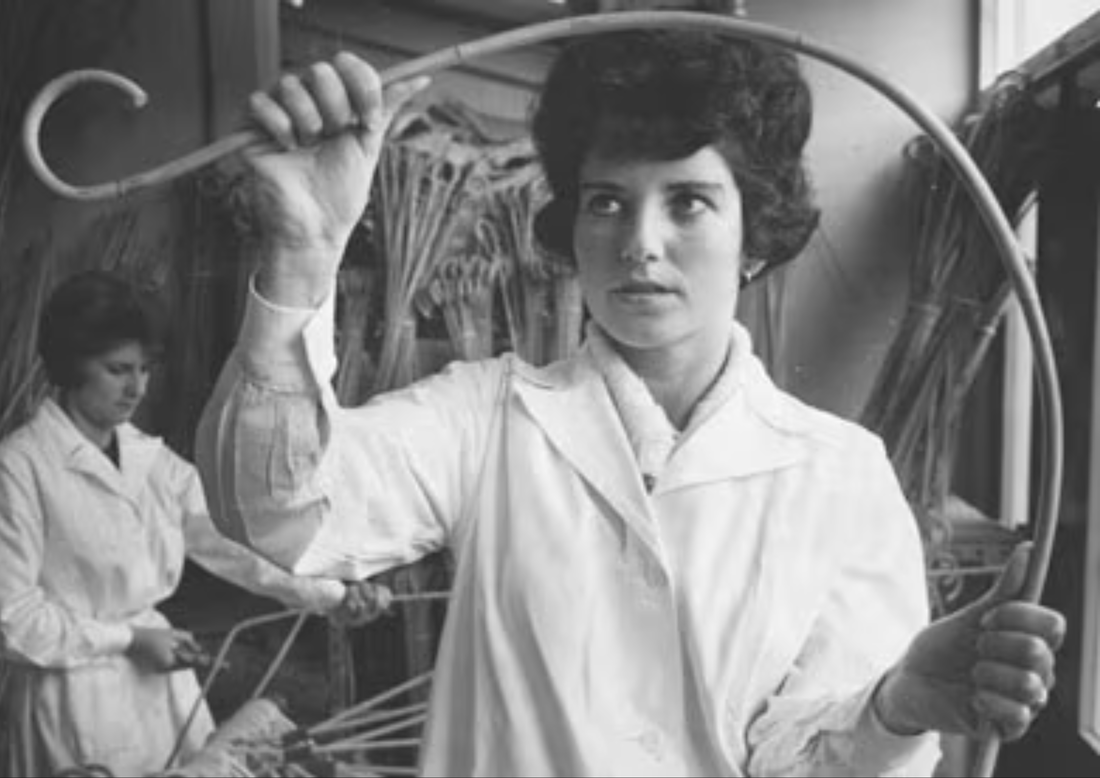 In this moving essay, Maya Ng reflects on the differences in disciplining children between New Zealand and her home country of Malaysia.
Essay by Maya Ng During the first Margin meeting, where everyone took part and placed their ideas, a member of us raised her hand and said two words that sent me back to five years ago. “Cultural Shock” As an immigrant, I’ve had a handful of experiences. Ranging from wearing shoes indoors, to people walking barefoot in public. I still can’t wrap my head around that culture, it continues to make no sense. While everyone in that room chittered and chattered away, I still felt like I was alone. Think back to when you were in primary. What was one of your greatest fears in school? Sure, cooties were a big thing then, but for me it was - well, school. Back in early 2017, after the Chinese New Year holidays in Malaysia, I had forgotten to bring my maths worksheet. It was left on the dining table where I rushed to complete it that morning. The consequences were fatal. The teacher wasn’t just not happy, she was absolutely furious. It was to the point where she screamed, threw my desk and bag out of the class. The chair struck my thigh in the middle of her tantrum. She roared at me, hand gripping the slender rattan, I knew what would be coming. 5 slashes on the back of the hand, 45 on the palm. A total of 50 slashes altogether. This was “discipline”. Not those where it's one or two or ten - this was the real deal, and there was no way out of that. Caning was a common use of “discipline” back in Malaysia, that was how I was brought up. While I disagree that adult figures should cane children, it was what I knew. Didn’t bring your homework? Caned. Late to class? Caned. Humming to yourself but you’re bad at singing? Caned. I learnt many things about caning over the five primary school years. A harder rattan doesn’t hurt as much as a flexible one, make sure that the stick hits below your fingers - or you can’t write for the rest of the weekFlexible rattans with rubber bands tied at the tip were basically your doom. Instead of talking about the recent Power Rangers episode, or who got their parents to deliver their lunch during break time, it was which teacher caned the hardest. My childhood consisted of canning to the point it wasn’t the cane I feared, but who held it. Arriving in New Zealand schools was basically stepping into Wonderland. Clean streets, rare sights of drains, actual trees, less motorcycles, and shepherd pie. But, something was off in the school. Something I didn’t understand or believe. There were no “discipline” methods: no canes or rulers to be “disciplined” by. There were no conversations on who caned hardest, but rather the recent video of DanTDM on YouTube. Nobody watched Power Rangers here. I expected our principal to walk around the school with a cane in his hand, but that didn’t happen either. The only day that I had seen a cane was on the day we learnt about the Victorian School Era, about writing on slates, using charcoal pencils, and being caned. A lot of my classmates seem to have found it amusing, I remember one of the girls whispered into my ear. “I really want to be caned just to know how it feels like.” It must have struck a chord in me, because I was fairly upset about her comment. To them it probably still remained an unsolved mystery. During this time of writing, as I’m nearing the end of my school years and preparing for university, I wondered how I pulled through in the end. How common high school mishaps like not being invited to parties, break ups, falling out of friendships, attempting to send the “photos”, had little to no effect on me. I realised that caning gifted my stoic nature, a habit of suppressing my opinion and emotions. It built an instinct that the consequence of failing would result in my hand caned. I’m quite open to discuss my experience being caned, in a certain way it’s nostalgic, but it brings back bittersweet memories. With the lack of coverage on this issue, I sometimes feel like my experience was nothing but a daydream, a horrible nightmare, or in between.  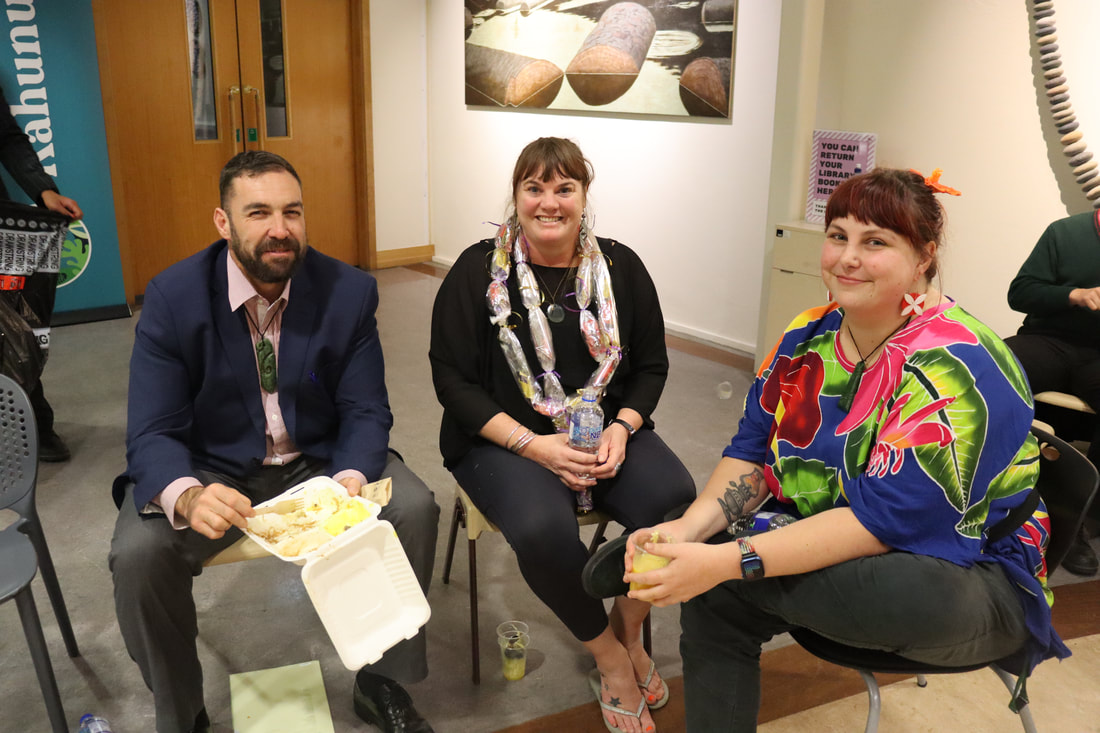 Special Report by the Margin Team On the 19th of June, 62 Pacifica girls and boys - from years 11 to 13 - had the privilege of attending Fono, consisting of students from St Cuthbert’s College and Dilworth. Fono is an event that happens annually, wth the year 12 and 13 students organising the event. Their work is supported by various teachers from both schools. The organisation of this event is vital. A major decision is the theme, as this is the core focus of the event. This year's theme was Tauhi Vā. Tauhi Vā is one of the four Tongan values. Tauhi means to care for or nurture, and Vā means the spaces between things or people. Combined, this means to nurture and care for the relationships between people. The theme took inspiration from the relationships between students from Dilworth and St Cuthbert’s. The Fono leadership team expressed their reasoning for this theme and their motive, being to connect and create relationships between both schools. This was further encouraged by the Fono leadership team. On the day, they had stated “Please use this opportunity to make connections (...) and remember this year's theme”. Fono is made up of a series of speakers, this year having four. Efeso Collins was the first speaker for Fono. Efeso Collins is a New Zealand politician, of Samoan heritage. During his speech, he focused on the importance of Tauhi Vā to him; This was his family, as they are an important relationship in his life. The second speaker, Graham Tipene, emphasised the importance of Tauhi Vā. Graham Tipene is a Maori artist, and much of his artwork is displayed across Tamaki Makaurau. Graham Tipene's speech emphasised the importance of keeping and nurturing healthy relationships. Sulu Fitzpatrick is of Samoan heritage and is a St. Cuthbert's Old Girl. She is a Netball player for the Northern Mystics, and was the third speaker. Sulu Fitzpatrick's story of losing herself encompassed the importance of Tauhi Vā. The final speaker at Fono was Sekope Kepu. Sekope Kepu is an Australian rugby player and the captain for Moana Pasifika. His speech focused on the importance of Tauhi Vā in his career, especially as a captain. Throughout Sekope Kepu's speech, he displayed the value of Tauhi Vā in a team environment and as a leader. One student particularly enjoyed the speakers, especially Efesso Collins' speech, stating, “I thought he was going to talk about politics and his job, (...) he talked about his sacred Tauhi Vā which was his family”. The day ended with many activities. This allowed students from St. Cuthbert’s College and Dilworth to create inter-school relationships. The main activities included a dance competition, followed by a workshop done with Action Education. One of the participating students from St. Cuthbert’s College stated, “It was something new to me, and it was a good experience”. Many students appreciated the purpose of the day. In the words of another student, "It was something I really enjoyed and I would do it again". Photos all courtesy of the STCC student photography team 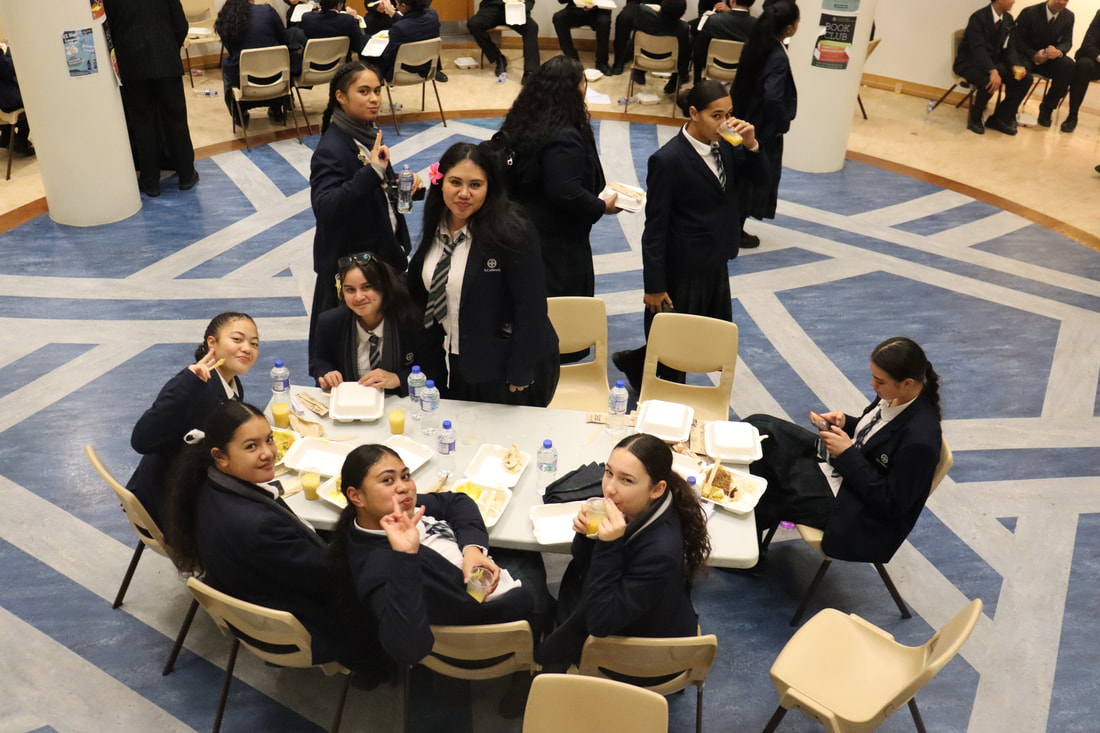 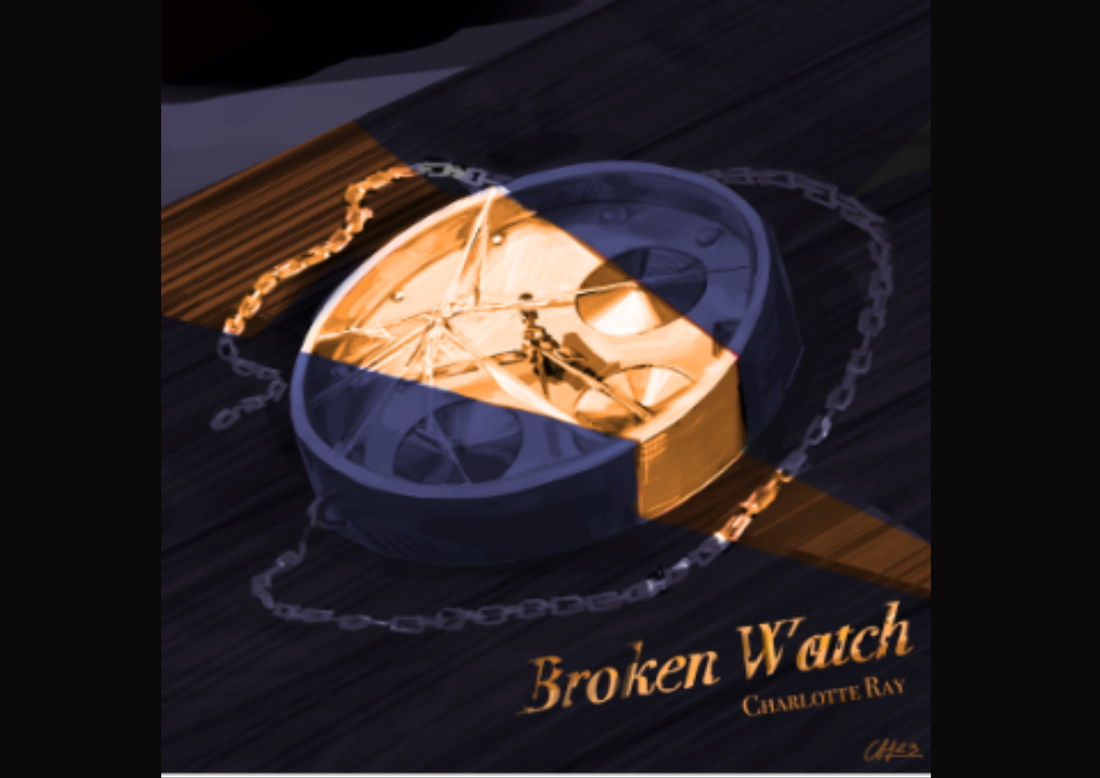 Poem by Charlotte Ray
A watchmaker has a broken watch. He tries to repair it to no avail As no matter how much time he may take, The once ever ticking clock, Will never be the same. The face that set life at steady pace The promise of devotion Proved to be only temporary But now that promise is broken What's left is aerie. The man is still co-dependent On an item that shattered when he was losing face. He is left in a room that was once loud Has become a quiet place. Borrowing mismatched parts, Similar in size and shape; His attempts are futile and in vain. For each cog was unique He can't fix what's broken, Not when he's lost what can't be replaced. |
Archives
December 2023
Categories
All
|
 RSS Feed